


What Is OCD? What Are The Top 7 Types of Obsessive Compulsive Disorder?
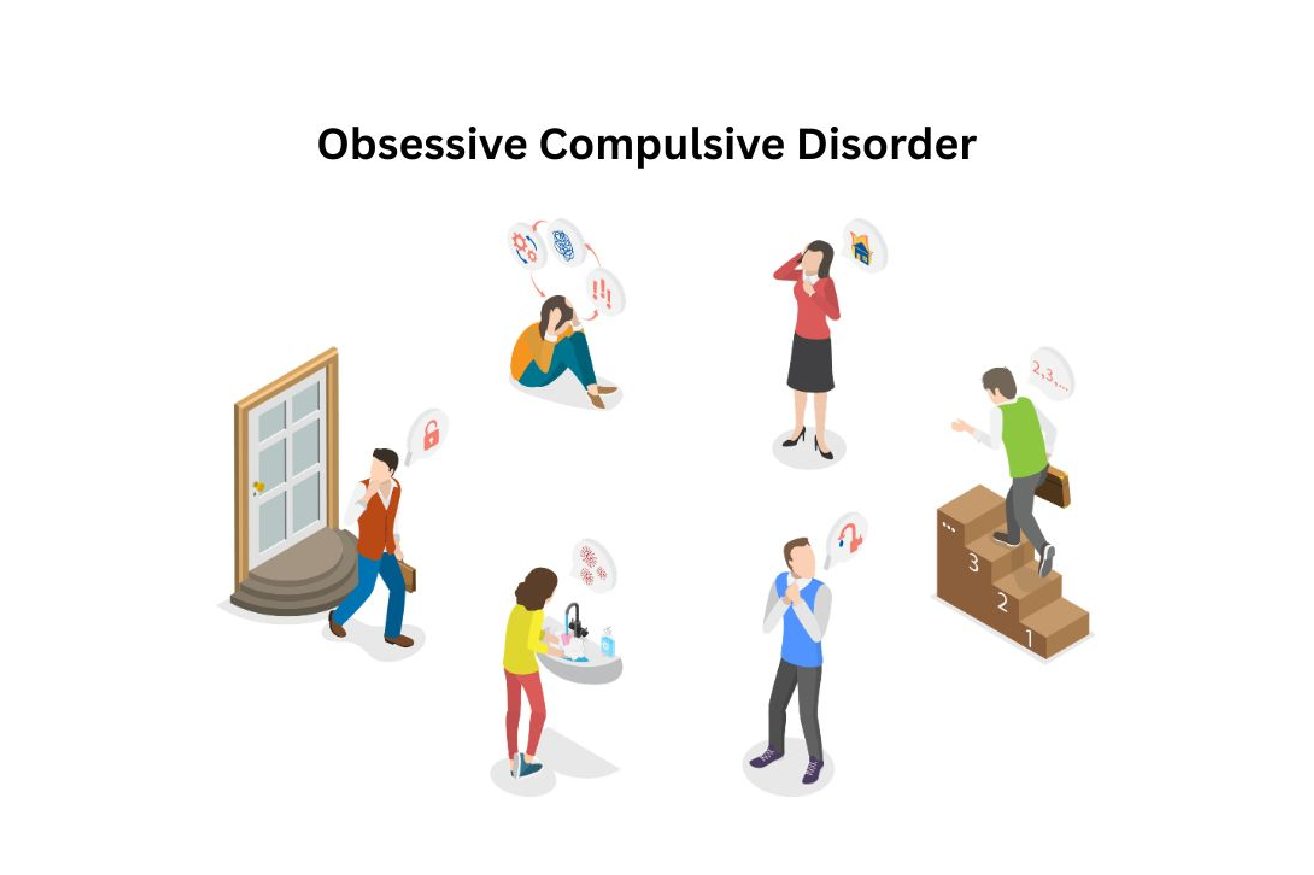
You lock up the door at night, and you check it once, twice, thrice & again just to make sure one more time, or maybe you find yourself arranging the desk, making sure everything is faced in the same direction, or right angle, have pens, or even your wardrobe in color-coded form. When you get an itch when someone doesn't use a coaster for their drinks, if this sounds familiar, you might have joked about it like, 'I am so OCD', to cover up for being rude about cleanliness.
But the thing is, OCD isn't the joke, and honestly, it's not even a personality trait. The 'little quirks' we have are actually little because the real OCD is a serious mental health condition. The one that consumes you & drains you emotionally, and day-to-day tasks might feel like it's a lot. This time, let's get to know what OCD actually is and how it shows up in multiple ways & most importantly, let's try to recognize it so we can get help. So let's talk about what OCD actually is, how it shows up in different ways, and most importantly, how to recognize it and get help.
What Actually is OCD (The Clinical Definition)
Obsessive-Compulsive Disorder (OCD) is a psychiatric disorder that is a recurrent cycle of two fundamental aspects: obsessions and compulsions. We will break them up and see each one of them separately. Obsessions are undesirable, intrusive thoughts that continuously appear in your mind and remain. These may bring about distress and anxiety. They are not mere thoughts that bother you; they leave you troubled, pressing, and difficult to get out of.
Compulsions and repetition, the omission of which you are aware of not having completed. Compulsions are recurring actions or mental exercises that you are compelled to carry out following an obsession. The goal? To alleviate anxiety or to avoid the occurrence of something bad. However, the thing is that, in this case, the relief is only momentary, and the cycle renews itself.
What Are The Symptoms of OCD? How to Identify if Someone Has OCD?
To be diagnosed with OCD, according to the DSM-5 (the Diagnostic and Statistical Manual of Mental Disorders), the following obsessions and compulsions must:
Obsessions:
Recurrent, persistent, intrusive, and unwanted thoughts, urges, or images that cause marked anxiety or distress. The individual attempts to ignore, suppress, or neutralize them with another thought or action (compulsion).
Compulsions:
Repetitive behaviors (e.g., hand washing, ordering, checking) or mental acts (e.g., praying, counting, repeating words silently) that the individual feels driven to perform in response to an obsession or according to rigid rules.
And here is another point, many OCD sufferers are aware that their thoughts and actions are irrational. They are not insane; they have gotten caught in a circle that is being reinforced by their brain.
The Cycle of OCD and How One Gets Trapped:
1. The Intrusive Thought
An obsession appears. It might be the fear of contamination, the image of violence, or the suspicion that you have not locked the door.
2. Anxiety Spikes
The idea causes severe discomfort. Your brain shouts: You are going to have something bad happen to you unless you do something about it.
3. The Compulsion
You do something to disarm the anxiety. Wash your hands. Check the lock. Repeat a prayer. Mentally recalculate the situation to be certain.
4. Temporary Relief
The anxiety drops. For a moment, you feel better.
5. The Thought Returns
And it always does. Since doing the compulsion taught your brain one thing: That ritual worked. We must do it again next time. This is the trap. The more you make a concession, the more intense OCD is. The point is not that you can break the cycle with the strength of will, but that you can learn to act differently with yourself.
The 7 Common Types of OCD
OCD is incredibly diverse. The themes vary from person to person, but most fall into one of these seven categories.
1. Contamination OCD
What it appears like: A severe phobia of germs, dirt, body fluids, or environmental pollutants. It is not being wary about washing the vegetables, but it is a swallowing horror that common things are being poisoned.
Common obsessions:
- This doorknob is dirty and will cause my family to get sick.
- Someone said his clothes were contaminated in that public restroom.
- I will infect all the people I love, touching that.
Common compulsions:
- The use of a lot of hand-washing (occasionally until the skin turns raw).
- Staying away and avoiding meeting by touching hands or touching common surfaces.
- Hour-long cleaning rituals.
- Requesting assurance from others that everything is okay.
Who's more impacted?
Individuals who are in caregiving positions are faced with increased contamination fears as the stakes appear greater due to their duties with the young children, parents of young children, and individuals having elderly parents. Individuals who have a history of severe illness (both personal and in a loved one) can also be more susceptible.
Risk factors:
This theme may be activated or aggravated by a severe disease in the family, occupation in a high-exposure situation, or contamination trauma.
2. Checking OCD
What it appears to be like: Each time you do something, you are left doubting that you did it right or safely. You check once. Then again. Then again. But the suspicion does not ever disappear.
Common obsessions:
- 'Did I leave the stove on?'
- What would I do, what would I do, driving my car, and I did not see anybody?
- Did I make an error in sending that email that will cost me my job?
Common compulsions:
- Checking locks, appliances, or switches repeatedly.
- Further examination of the previous behavior to demonstrate that nothing bad occurred mentally.
- Requesting other people to reassure you (Did you see me lock the door?).
- Snapping pictures or recording videos to serve as evidence (typical of the digital era).
Who's more impacted?
Individuals in sensitive positions, such as managers, parents, and people working with sensitive data, might be more vulnerable. The doubt is nourished by the burden of the responsibility.
Risk factors:
An error with real impact in the past, a perfectionist upbringing, or occupations where mistakes are very visible may be risk factors.
3. Symmetry and Ordering OCD
What it appears to be like: A severe desire to have things to be just right. Objectives have to be oriented in a specific direction, steps have to be followed in a specific sequence, or things have to be even-handed.
Common obsessions:
- That snapshot is a little bent and stiff - things will go wrong when I do not mend it.
- It is like, I have to touch something with my right hand when I touch it with my left hand.
- The books are not in the right order, and I can not concentrate on anything else.
Common compulsions:
- Organizing and reorganizing.
- It involves counting things in patterns or doing activities in certain numbers.
- Feeling objects in a specific order.
- Mental activities to soothe the thoughts.
Who's more impacted?
This is a theme that arises in childhood. This type may be difficult among people who have perfectionist traits, artists, designers, or in a career where attention to detail is crucial.
Risk factors:
Childhood exposure in which order was equivalent to safety, having a parent with inflexible routines, or being inherently sensitive to visual/spatial discomfort.
4. Harm OCD
Appearance: Scary, obsessive thoughts of injuring oneself or other people. It is also among the worst types of OCD in the sense that the thoughts are so contrary to the person.
Common obsessions:
- What would happen should I just came out and stab my partner with this kitchen knife?
- What would you do in case you get out of control and drive somebody into the traffic?
- What if I am a dangerous person undercover?
Common compulsions:
- Keeping off knives, sharp or high places.
- Revisiting previous relationships in your mind to demonstrate that you are not hurting anyone.
- Wanting to be reassured by the people she loves (Do you feel safe with me?).
- Concealing or discarding things that may serve as weapons.
Who's more impacted?
Harm-related intrusive thoughts towards the infants are prevalent among new mothers and fathers. This phenomenon has a title, postpartum OCD. Sleep deprivation combined with hormones and having a lot of responsibility forms the storm of perfection.
Risk factors:
After-delivery, trauma history, and high levels of responsibility towards the vulnerable. Notably, individuals with Harm OCD tend to take less action on their thoughts; the thoughts are troubling because they conflict with strongly held values.
5. Relationship OCD and Sexual Orientation.
What it appears like:
A feeling of constant suspicion of your sexual orientation or the authenticity of your relationship. The individual wonders whether he/she is really straight, gay, or in love, and the uncertainty eats him up.
Common obsessions:
- What if I am attracted to the same sex and I am simply in denial?
- But what if I do not love my partner?
- Did I like that individual? What does that mean?'
Common compulsions:
- Checking mentally that you are attracted to people.
- Getting reassurance on the part of partners or friends (Do you think I love you?)
- Measuring your relationship with others.
- Eschewing circumstances that can provoke suspicion (watching movies, talking to people).
Who's more impacted?
This theme tends to influence individuals in serious relationships when they are in a period of transition (moving in, marriage, having children). It is also capable of influencing those who are unsure of who they are in other life fields.
Risk factors:
Oversensitivity to certainty, being exposed to relationship anxiety in the family of origin, and being subjected to social pressure of having a perfect relationship or having a clear identity.
6. Scrupulosity (Religious OCD)
What it appears like:
Compulsive fear of sins, immorality, or displeasing God. The individual gets preoccupied with the question of whether he/she is thinking or doing what is morally acceptable.
Common obsessions:
- What should we think? What should we think? Was that thought blasphemous?
- Did I not confession make of all the sins?
- What will happen to me in case I lie by accident, and God punishes me?
Common compulsions:
- Religious psychosis or overpraying.
- Repenting of sins, of small sins, again and again.
- The need to find comfort with religious leaders.
- Compulsive reading of sacred texts to be sure.
Who's more impacted?
Those who were brought up in a strict religious setting might be susceptible. However, this is not all about religion; scrupulosity can also be found among people with high levels of morals in honesty, fairness, or ethics who do not have a religious context.
Risk factors:
Religious upbringing that focuses on sin and punishment, an inherently conscientious personality, and moral teaching that focuses on thought crimes as synonymous with actions.
7. Hoarding OCD
What it appears to be:
Being unable to be rid of things because you are afraid of something bad happening to you. This is unlike the hoarding disorder - the reason to hoard, in OCD, is due to certain obsessive anxieties.
Common obsessions:
- But what about throwing this out, and may require it later?
- In this object, I lost memories I will never have again.
- When I put off this, dreadful will be the consequence.
Common compulsions:
- Rescuing things that would be deemed useless by other people.
- Gathering stuff in case.
- Problem sorting due to the perceived importance of everything.
- Stress because someone makes an attempt to clean you out.
Who's more impacted?
The elderly can be more vulnerable, usually because of lifelong trends. When one has suffered a major loss (death of a loved one, divorce, financial ruin), they can hoard to preserve their safety.
Risk factors:
Prior deprivation or loss, family demonstration of hoarding behavior, and co-occurring future anxiety.
Common Myths vs. Facts About OCD
| Myth | Fact |
|---|---|
| 'Everyone's a little OCD.' | This trivializes a serious disorder. OCD causes significant distress and consumes hours daily. Simply being organized is not the same as having OCD. |
| 'OCD is just about cleaning and organizing.' | OCD can attach to almost anything, relationships, harm, sexuality, or religion. The themes are as varied as human fear itself. |
| 'People with OCD just need to relax.' | OCD is a neurobiological condition, not a choice. Telling someone to relax is like telling someone with asthma to 'just breathe better.' |
| 'If you have intrusive thoughts, you secretly want to act on them.' | This is one of the cruelest misconceptions. Intrusive thoughts are ego-dystonic, meaning they go against the person's deepest values and are distressing because of that. |
| 'OCD isn't treatable.' | False. OCD is highly treatable with the right approach, such as Exposure and Response Prevention (ERP) therapy and medication. |
What Causes OCD?
It is not simple to understand the cause of OCD in a person. There are several factors that cause OCD.
Genetics
OCD tends to be familial. When a close family member is affected with OCD, there is a chance that you have a high risk of developing the same. Scientists are yet to discover particular genes, but they do concede that genetics is involved.
Brain Chemistry
The brain imaging research indicates that individuals with OCD have different brain chemistry as compared to those without. As an example, the researchers have demonstrated brain variations in the functioning of frontostriatal circuits (circuits that test information and make decisions) of individuals who have OCD. The 'brakes' that regulate repetitive thoughts and behaviours do not seem to work as well as it seems.
Serotonin
The mood, anxiety, and impulsive behaviour have been associated with the neurotransmitter serotonin. Most pharmacologic interventions of OCD raise the levels of serotonin, and hence, serotonin seems to have some role in OCD.
Environmental Factors
In susceptible individuals, stressful life events, trauma, or even any form of infections (like the pediatric autoimmune neuropsychiatric disorders related to strep infections) can lead to the development of OCD.
Temperamental Factors
There are also temperament or personality aspects (e.g., being over-responsible or over-perfectionistic or over-estimating threats) that can provide an environment where OCD will flourish.
How Is OCD Treated?
The good news is as follows: OCD can be cured. Appropriate interventions will allow breaking the cycle and restoring the quality of life.
Psychotherapy:
Exposure and Response Prevention (ERP).
The gold standard of treatment is ERP. It is a process of progressively exposing oneself to circumstances that result in the development of the obsessions and avoiding the compulsive reaction. With time, your brain gets to know that it does not need the ritual to release anxiety; it just decreases. It is not easy work, but it reprograms the brain to respond to intrusive thoughts.
Medication: SSRIs
The initial drugs used in OCD are Selective Serotonin Reuptake Inhibitors (SSRIs). They raise the level of serotonin in the brain, which reduces the severity of the obsessions and compulsions. OCD may also need increased doses, unlike anxiety, and it can take 8-12 weeks to begin to show full action.
Combination Approach
Therapy and medication make some of the best results for many. The therapy would teach skills; medication would minimize the volume of intrusive thoughts to an extent that the skills would be effective.
Support and Psychoeducation.
Support and understanding in the family are very important. OCD not only affects the person concerned but also all the people who love him or her. The knowledge of the condition makes families respond in a compassionate manner instead of being frustrated.
OCD: Hope and Recovery.
In the event that you identify yourself in any of these pages, here is what I would like you to understand: You are not your thoughts. And you are not broken. Healing of OCD is not about getting an intrusive thought. Intrusive thought is a natural experience of human life - studies identify that 90 percent of the population experiences intrusive thoughts. It is the variability in your reaction to those thoughts.
Through therapy, one can learn how to allow thoughts to arrive and leave without holding on to them. You may break the cycle of meetings. You will regain hours of your day. It takes courage to seek help. However, this does not need to be solved yourself. We at Mpower are here for you with holistic mental health services to individuals and families who are dealing with OCD or other issues. There is professional advice and treatment that can assist you in coping with such symptoms so that you can enjoy a better life.
image credit : freepik

Understanding Substance Abuse: Types, Causes And Warning Signs
Acrophobia - Fear of Heights: Signs and How to Treat It