


Therapy Approaches That Help Heal Intergenerational Trauma: CBT, DBT, Somatic Work & More
Understanding Intergenerational Trauma
Sometimes the stress or emotional pain we feel does not start with us. It may have started years earlier, in the lives of parents or grandparents. Intergenerational trauma is when emotional struggles are passed down through families over time. This trauma will come from many experiences, such as poverty, loss, discrimination, neglect, abuse, or living under too much stress. Families usually are not open about these experiences, but it does not mean their impact disappears. Children sometimes pick up on emotions, fears, and coping habits without any explanation.
To undergo difficult situations, families sometimes develop certain coping mechanisms. Some people learn to stay strong. Others hide their feelings, avoid conflict, or focus on caring for everyone. These behaviors helped their family in a hard situation, but after they have emotional struggle. People affected by intergenerational trauma can notice anxiety, overthinking, trouble trusting others, fear of failure, or difficulty in showing emotion. Many people aren't able to realize these problems are connected to their family history because they feel it's all common.
How Does Therapy Help?
Therapy can help where emotional pain comes from, but inside doesn't always change how someone feels or reacts. Trauma will affect thoughts, emotions, and even the body. Some people feel tense and restless. Because trauma always affects both mind and body, healing requires more than just talking. Therapy will help to create a space for learning new ways to cope with old beliefs and feel safer emotionally. With support, people can slowly recover from longer service.
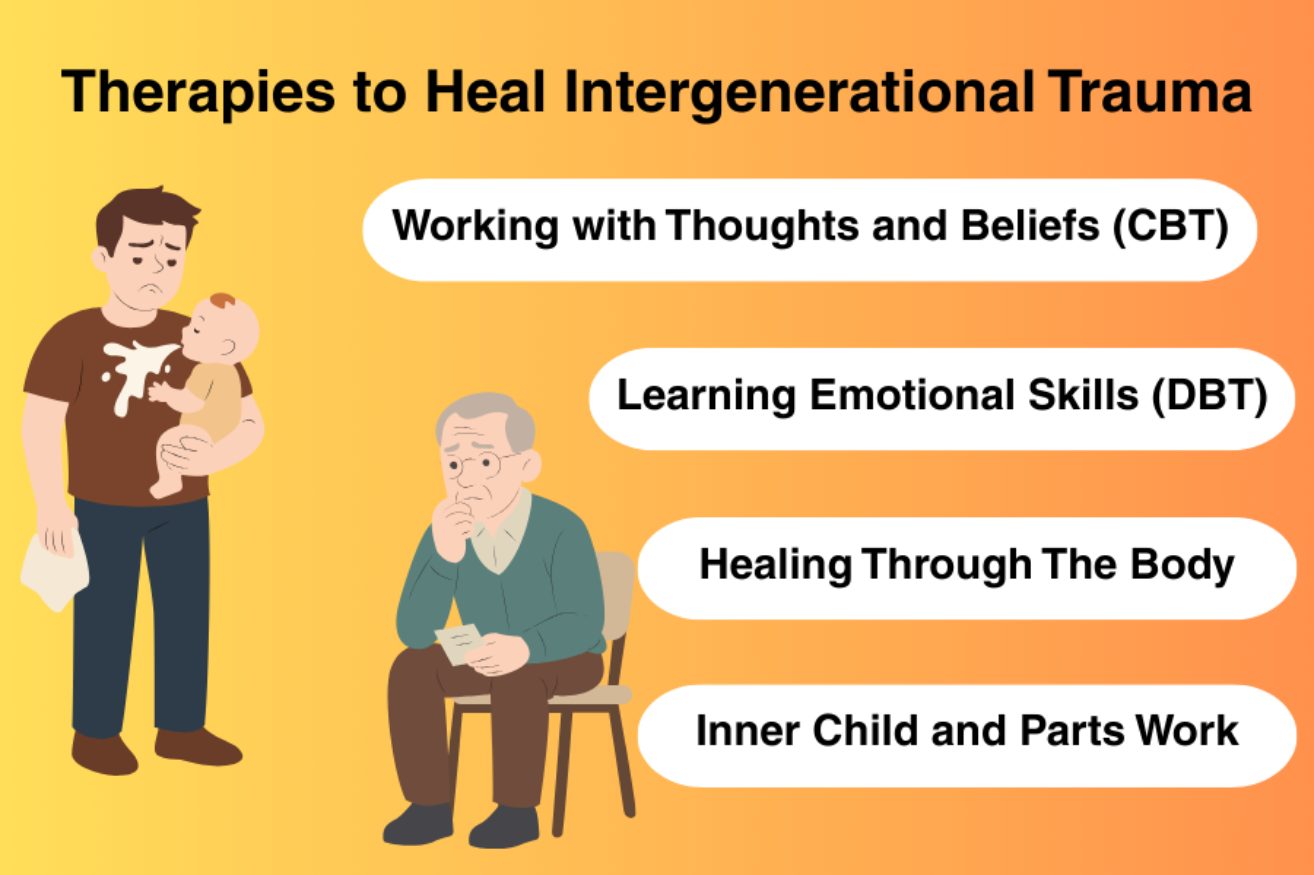
1: Working With Thoughts and Beliefs (CBT)
Many beliefs we have learned early in our lives. Someone grows up thinking they have to work constantly to value themselves, that emotions are always hidden, and they feel asking for help is unsafe.
Cognitive Behavioral Therapy will help people to understand them belief affect their daily life. In therapy, individuals learn how to question these thoughts and replace them with healthier and more realistic thoughts. This can reduce anxiety and self-criticism.
2: Learning Emotional Skills (DBT)
Not everyone was thinking about how to manage strong emotions. Some families avoided their feelings, and others experienced a lot of emotional imbalance in their lives. Dialectical Behavior Therapy is completely focused on building practical skills, such as managing over emotions, stress coping, and clear communication. These skills will help them become more connected with their relationships.
3: Healing Through The Body
Trauma not only lives in thoughts. It can also physically, through chronic tension, fatigue, headaches, or a constant feeling of struggle. Body-based therapy helps people identify how stress shows up in their entire bodies. This approach mainly takes on building a sense of safety, releasing tension, and calming the entire nervous system. It will especially help those who feel stuck with their problem even after talking with someone.
4: Inner Child and Parts Work
Inner child and parts work focus on emotional needs that never underwent in their early life. Many adults carry parts of themselves that are to stay quiet, strong, or take care of others' safety.
Therapy helps people understand these parts are judgement not a conversation. This therapy will help support healing, improve self-esteem, and create emotional support.
Looking at Family Patterns
Family systems therapy explores roles and behaviour passed down through generations. It helps people see why pattern repeating and how they learned to lead others. This approach does not blame parents and caregivers. Most families give their best to take care of people. The goal is simply to understand healthier ways to respond now.
Why Intergenerational Trauma Is Often Missed
Intergenerational trauma sometimes goes unnoticed because it rotates throughout life. Emotional pain is sometimes ignored or minimized, and questioning family lifestyle can make them feel guilt or fear. Therapy helps people who acknowledge trauma is not about blaming the past. It is about understanding the past and choosing a different path.
How MPOWER Supports Healing
At MPOWER, we offer trauma-informed therapy in a supportive and non-judgmental space. We understand that every person's story is different. Our therapists use a combination of approaches that address thoughts, emotions, and the body, including Cognitive Behavioural Therapy, Dialectical Behavioural Therapy, and somatic practices. Treatment is always personalized to match each individual's needs and goals.
Healing Is Possible
Healing intergenerational trauma does not mean deleting the past. It means learning healthier ways to cope, connect, and move forward. When one person chooses healing, it can have a positive impact on future generations.
Final Thoughts
You are not broken. You adapted to what you were given. Those patterns once helped you survive, even if they no longer serve you today. Healing takes time and support, but it is possible. At MPOWER, we are here to help you move forward, one step at a time.
image credit : freepik

Understanding Substance Abuse: Types, Causes And Warning Signs
Acrophobia - Fear of Heights: Signs and How to Treat It