


Treatment for Peniaphobia - When to Seek Professional Help?
Summary
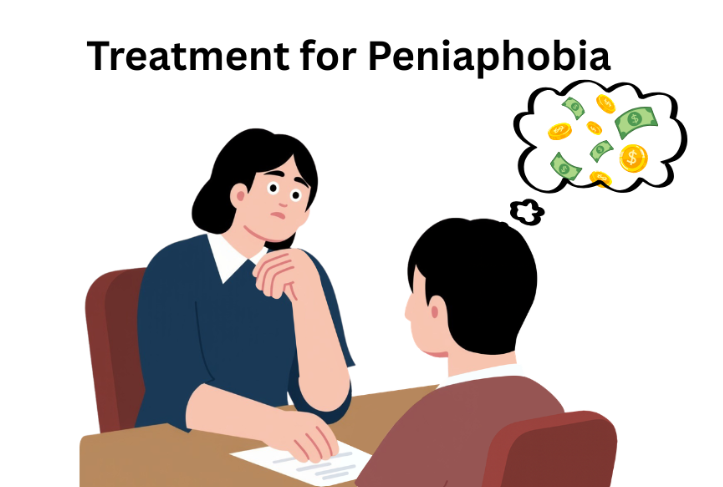
Treatment for peniaphobia typically includes Cognitive Behavioural Therapy (CBT), exposure therapy, counselling, and, in some cases, medication to help manage severe anxiety. If an intense fear of poverty begins to interfere with daily life, relationships, work, or financial decision-making, seeking professional help is recommended. Early treatment can help individuals understand the underlying causes of peniaphobia, reduce anxiety, and develop healthier coping strategies for long-term emotional well-being.
What Is Peniaphobia?
There is a uniquely draining emotional toll that comes from living in constant terror of financial instability - even when your bank account says you are perfectly safe. This deep-seated, irrational dread of poverty is known as peniaphobia.
Not stressed about it - afraid. If this resonates with you, please understand one thing right away: your feelings are entirely valid. What you are experiencing isn't just a vague worry - it actually has a medical name. It's called peniaphobia, and it is defined as an intense, overwhelming fear of poverty or financial ruin. This isn't your everyday, run-of-the-mill money stress; it is a genuine, deep-seated phobia. Here is what makes it so cruel: it does not care how much money you actually have.
And that is precisely what leaves outsiders so bewildered. The person living with peniaphobia might have a stable job, a decent savings account, no outstanding debt. By every objective measure, they are fine. Better than fine, even. And yet their nervous system has not gotten the memo. Their brain is still operating like they're one missed paycheck away from sleeping on the street.
You can know. Look, normal money stress makes sense. Your car breaks down, your hours get cut, prices go up of course you feel anxious. That's your brain doing its job. But peniaphobia does not need an actual crisis to show up. It just... lives there. Permanently. It manifests as a constant, low-level hum of anxiety that instantly escalates into absolute panic the second anything remotely related to finances comes up.
Read more about Peniaphobia - The Fear of Money.
What Are The Common Signs And Symptoms?
Furthermore, the ways this fear presents itself aren't always glaringly obvious. It can show up in many subtle ways, including:
Avoiding Unopened Letters
Walking past a stack of unopened letters every day because opening them feels like pulling the pin on a grenade.
Avoiding Your Bank Account
Not logging into your bank app for months-not because you're irresponsible, but because seeing the actual balance feels unbearable.
Obsessively Checking Your Balance
Constantly refreshing your bank account, hoping that the numbers will somehow feel more comforting this time.
Deprivation Disguised as Discipline
Refusing to go to the dentist because of the cost, even when you genuinely need treatment.
Holding on to Worn-Out Belongings
Continuing to wear shoes that have genuinely fallen apart because spending money on a new pair feels unsafe.
Avoiding Social Activities
Saying no to dinner with people you love - not because you cannot afford it, but because spending the money feels like removing a brick from the wall standing between you and complete financial ruin.
Carrying a Heavy Burden of Shame
From the outside, these behaviours can look like admirable frugality. Nobody sees the panic or the mental gymnastics you go through every time you have to spend even a small amount of money.
Suffering in Silence
You may carry all of this privately, convinced that if you told someone, they would simply tell you to relax. Yet, there are very few things more isolating than a fear you feel you cannot explain.
What Causes Peniaphobia? Where does it come from?
For a lot of people, honestly, it starts young. If you grew up in a house where money was scarce - where the tension at the dinner table was thick with it, where you learned the specific sound your parents' voices made when a bill arrived, your brain built a very logical conclusion: the world isn't safe, and money is survival. That lesson doesn't just fade because your circumstances eventually changed. You can be forty years old with a solid income, and your nervous system is still that kid, waiting for everything to fall apart.
And it's not always about genuine poverty, either. A parent who was anxious about money, who counted every penny with panic rather than care, who said things like we are one mistake away from losing everything can wire those same patterns into a child just as effectively. We absorb the emotional atmosphere we grow up in. That's just how humans work.
How Does Peniaphobia Affect Thoughts And Behaviour?
For others, peniaphobia is essentially where an already-anxious brain decides to park itself. If you're someone who struggles with generalised anxiety or OCD, you know that anxiety needs something to latch onto. And money is a perfect target - it's abstract, it fluctuates, you can never fully control it. So the anxious brain makes a deal with itself: if I can just save enough, watch closely enough, never spend carelessly enough... then I'll finally feel safe.
Spoiler: it never works. Because, at its core, the panic was never truly about the money itself.
There's actually a fascinating study in the Journal of Economic Psychology.
What Are The Treatments Available for Peniaphobia?
What the researchers found is that financial crisis anxiety doesn't just change how you feel or perceive.
Cognitive Behavioural Therapy (CBT)
The second is catastrophic thinking, where your brain starts treating extremely unlikely disasters as if they're already basically happening. A small dip in income doesn't register as a temporary adjustment; it registers as the beginning of the end.
But here is the aspect of it that truly hits home for me. The study found that people with financial anxiety can intellectually state that relief is not. That is not a character flaw. That is a very specific, documented glitch in how anxiety rewires perception, and once you understand that, it becomes a lot easier to stop blaming yourself for not being able to just "calm down and think rationally."
Exposure Therapy
Therapy, specifically Cognitive Behavioural Therapy, is genuinely effective for this, and the reason it works is that it goes directly at that glitch.
Can Medication Help?
It is not about positive thinking. It's not about being told your fears are irrational. It's about learning to step inside.
When Should You Seek Professional Help?
Alongside that, Exposure Therapy works on the avoidance side of things. Because every time you avoid opening the bank statement, your brain feels a tiny surge of relief, and that relief accidentally teaches the fear to stick around. The avoidance becomes the fuel. Exposure therapy very gradually reverses that, starting so small it feels almost silly (looking at one receipt without throwing it away) and slowly building up from there. Your nervous system learns with evidence, over time, that confronting the thing doesn't actually destroy you.
For some people, especially when the panic is severe enough to be physically debilitating, a psychiatrist might also be part of the picture. Medication isn't a cure. It does not rewrite anything. But it can turn the volume down enough that the deeper work becomes possible.
Is Recovery from Peniaphobia Possible?
If you are somewhere in any of this and you're thinking about reaching out for support, please reach out to Mpower. Healing from this is not about becoming reckless with money, or not caring about the future. It's about being able to look at your finances without your body treating it like a life-or-death emergency. It's about making choices from a place of clarity rather than fear. You deserve to actually live in the life you have built. Not just survive it.
FAQs
What is the best treatment for peniaphobia?
The best treatment for peniaphobia depends on the individual's symptoms and how much the fear affects daily life. Psychotherapy, particularly cognitive behavioural therapy (CBT), can help people identify and challenge irrational thoughts about poverty and financial insecurity. Exposure-based techniques may also help reduce avoidance and fear responses. A mental health professional can recommend the most appropriate treatment based on individual needs.
How can you overcome peniaphobia?
Overcoming peniaphobia often involves addressing the thoughts and behaviours that reinforce the fear of poverty. Therapy can help you challenge catastrophic thinking, gradually face financial situations you tend to avoid, and develop healthier coping strategies. Practical steps such as creating a realistic budget and building financial stability may also reduce uncertainty. If the fear is persistent or overwhelming, professional mental health support can be beneficial.
Can peniaphobia be cured?
Peniaphobia can often be managed effectively with appropriate treatment, although there is no guaranteed or universal cure. Therapy can help reduce the intensity of the fear, challenge irrational beliefs, and improve your ability to cope with financial uncertainty. The outcome varies from person to person, and some individuals may need ongoing support to manage anxiety and prevent symptoms from returning.
Can therapy help with peniaphobia?
Yes, therapy can help people manage peniaphobia by addressing the underlying thoughts, fears, and behaviours associated with poverty and financial insecurity. A therapist may help you understand what triggers your fear, challenge unrealistic or catastrophic beliefs, and gradually change avoidance behaviours. Therapy can also provide practical strategies for managing anxiety and developing a healthier relationship with money and financial uncertainty.
Is CBT effective for treating peniaphobia?
Cognitive behavioural therapy (CBT) may be helpful for peniaphobia, particularly when the fear is driven by persistent negative or catastrophic thoughts about financial insecurity. CBT focuses on identifying unhelpful thought patterns and replacing them with more balanced perspectives. It may also involve gradually confronting avoided situations. A qualified mental health professional can determine whether CBT is appropriate for your specific symptoms.
When should you seek professional help for peniaphobia?
You should consider seeking professional mental health help if your fear of poverty is persistent, difficult to control, or begins to interfere with your work, relationships, health, or everyday activities. Professional support may also be appropriate if you constantly worry about money despite being financially secure, avoid necessary expenses, experience intense anxiety, or engage in compulsive financial checking. A mental health professional can assess your symptoms and recommend suitable treatment.
Can medication help treat peniaphobia?
There is no specific medication approved specifically for peniaphobia. However, if severe anxiety, depression, or another co-occurring mental health condition is present, a qualified healthcare professional may consider medication as part of an overall treatment plan. Medication is generally determined on an individual basis and may be combined with psychotherapy. It should only be taken under the guidance of a qualified medical professional.
What self-help strategies can help manage peniaphobia?
Self-help strategies may include recognising and challenging catastrophic thoughts, setting realistic financial goals, creating a manageable budget, and gradually facing financial situations that you tend to avoid. Mindfulness, relaxation techniques, and maintaining healthy routines may also help manage anxiety. However, self-help may not be enough when peniaphobia is severe or significantly affects daily life, in which case professional support is recommended.
image credit : freepik

Understanding Substance Abuse: Types, Causes And Warning Signs
Acrophobia - Fear of Heights: Signs and How to Treat It