


Top 7 Mental Health Challenges Faced by Older Adults
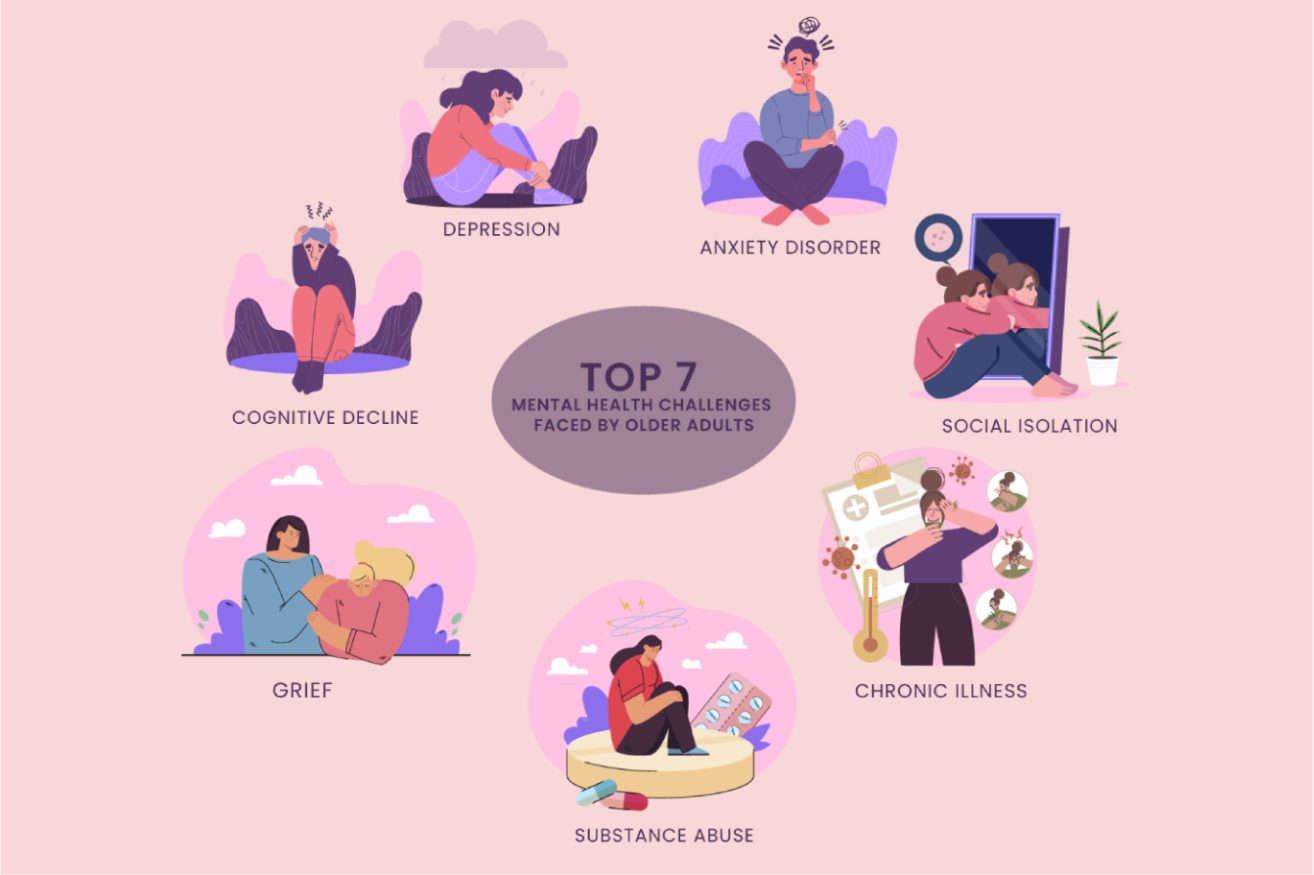
Aging is a journey that we often picture as serene and reflective-grandparents sharing wisdom, tending gardens, and cherishing family moments. Yet, behind this tranquil image lies a reality many older adults quietly face: the battle to maintain mental and emotional well-being.
Growing older brings changes-not only physical but emotional, psychological, and social. Retirement, health concerns, loss of loved ones, or shifts in independence can deeply affect mental health. While these challenges are natural, they often go unnoticed or dismissed as 'a part of aging'. But mental health, at every age, deserves care, understanding, and attention.
In this blog, let's explore the top 7 mental health challenges faced by older adults, the reasons behind them, and how we as families, caregivers, and communities can make a difference.
1. Depression - The Silent Shadow:
Depression is one of the most common mental health issues among older adults, yet it often hides in plain sight. Many elderly individuals experience persistent sadness, loss of interest, or fatigue but attribute these symptoms to 'getting old'. In reality, depression is not a normal part of aging, it's a condition that needs attention and support.
Why It Happens:
- Loss of spouse, friends, or family members
- Chronic health conditions (like diabetes, arthritis, or heart disease)
- Reduced social connections or retirement-related identity loss
- Isolation and loneliness
Impact:
Depression can affect appetite, sleep, memory, and motivation, leading to a decline in overall health. It also increases the risk of physical illnesses and slows recovery from existing conditions.
What Helps:
Encouraging social connections, involving older adults in meaningful activities, therapy (like CBT), and support groups can be transformative. Simple acts like daily phone calls, community programs, or hobby groups can reignite purpose and connection.
2. Anxiety Disorder - When Worry Takes Over
While it's common to worry about health or finances in later years, chronic anxiety can become overwhelming. Many older adults experience generalized anxiety, phobias (like fear of falling), or panic attacks. Unfortunately, these symptoms often go unreported, as seniors may feel embarrassed or fear being labeled as 'weak'.
Why It Happens:
- Declining health or fear of dependency
- Financial stress after retirement
- Medication side effects
- Cognitive decline or dementia
- Unresolved trauma or long-term worry patterns
Impact:
Anxiety can lead to sleep problems, muscle tension, irritability, and heart strain. It may also prevent individuals from participating in social activities or managing medical treatments effectively.
What Helps:
Mindfulness exercises, relaxation techniques, and psychotherapy can help manage anxiety. Gentle physical activity-like yoga or walking-also promotes calm and emotional balance. Encouraging open conversations about fear and uncertainty is crucial.
3. Dementia and Cognitive Decline - Losing Pieces of Memory
One of the most distressing mental health challenges in older adulthood is dementia-a group of conditions that affect memory, reasoning, and communication. Alzheimer's disease is the most common form, gradually eroding memory and independence.
Why It Happens:
Aging naturally affects brain function, but in dementia, abnormal protein buildup damages brain cells. Genetics, head injuries, and cardiovascular health can also play a role.
Impact:
Beyond memory loss, dementia brings confusion, personality changes, and emotional instability. It's not only a challenge for the individual but also for families who must adapt to shifting roles and behaviors.
What Helps:
Early diagnosis, cognitive stimulation (like puzzles or reminiscence therapy), and emotional support can slow decline and enhance quality of life. Creating structured routines and safe environments also helps reduce confusion and anxiety.
4. Loneliness and Social Isolation - The Quiet Epidemic
Loneliness is often called the "new smoking" for its severe impact on health. As friends pass away, families move away, or mobility declines, many older adults find themselves spending long hours alone. Social isolation isn't just emotionally painful-it's linked to depression, high blood pressure, cognitive decline, and even mortality.
Why It Happens:
- Loss of spouse or social network
- Living alone
- Retirement and reduced daily interactions
- Limited mobility or transportation barriers
Impact:
The emotional emptiness of isolation can lead to hopelessness, reduced self-esteem, and withdrawal. Over time, loneliness changes how the brain processes emotions, making people more sensitive to rejection and distress.
What Helps:
Community engagement programs, volunteering, senior clubs, and intergenerational activities help rebuild connection. Technology also plays a vital role-video calls and online communities can offer meaningful companionship.
5. Grief and Bereavement - Living with Loss
Loss becomes a recurring theme in later life-loss of loved ones, independence, or physical abilities. While grief is natural, prolonged or complicated grief can evolve into depression or anxiety. Many older adults struggle silently, believing they must be 'strong' or 'move on'.
Why It Happens:
- Death of a spouse, friend, or family member
- Loss of identity after retirement
- Health limitations affecting daily life
Impact:
Unprocessed grief may appear as fatigue, irritability, or social withdrawal. It can also exacerbate chronic conditions or impair immune function.
What Helps:
Healthy grieving involves expressing feelings openly, sharing memories, and seeking support. Grief counseling or therapy provides a safe space to process emotions and rebuild meaning after loss.
6. Substance Misuse - Coping in Unhealthy Ways
Substance misuse in older adults is often overlooked. Some may misuse alcohol, prescription medications, or sleep aids to cope with loneliness, pain, or insomnia. Because symptoms overlap with aging signs (like confusion or poor balance), it's easy to miss.
Why It Happens:
- Chronic pain or medical conditions
- Self-medication for emotional distress
- Past history of substance use
- Easy access to medications
Impact:
Substance misuse increases the risk of falls, liver damage, confusion, and emotional instability. It can also worsen depression or interact dangerously with other medications.
What Helps:
Open dialogue without judgment, careful medication management, and counseling can help older adults regain control. Programs specifically designed for seniors-like age-sensitive support groups - are highly effective.
7. Identity and Purpose Loss - 'Who Am I Now?'
After decades of working, raising families, or maintaining roles, retirement and aging can leave a void. Many older adults feel a loss of identity, self-worth, or purpose. This existential emptiness can lead to sadness, apathy, or even depression.
Why It Happens:
- Retirement and a reduced sense of contribution
- Physical limitations restricting hobbies
- Shifts in family dynamics (children moving away)
Impact:
Without a sense of purpose, individuals may lose motivation, neglect health, or isolate themselves. The emotional emptiness can quietly erode confidence and happiness.
What Helps:
Encouraging older adults to
Breaking the Silence Around Mental Health in Aging
Despite these challenges, mental health in older adults remains one of the least discussed topics. Many assume emotional suffering is inevitable in old age - but that's far from true. With empathy, awareness, and proactive care, older adults can thrive emotionally just as much as physically.
How We Can Help:
- Normalize conversations about feelings, stress, and loneliness.
- Encourage professional help - therapists specializing in geriatric care can make a big difference.
- Promote community programs that keep seniors engaged.
- Include them in decision-making, reinforcing autonomy and respect.
- Celebrate aging as a phase of wisdom, not decline.
Aging Gracefully-Inside and Out
The mental health care of older adults is not a fading flame but a light that needs nurturing. Every conversation, visit, or shared smile can help keep that light glowing. As society continues to age, our responsibility grows-to ensure that our elders live not just longer but happier, mentally healthy lives. After all, their stories, wisdom, and presence shape the world we inherit. Supporting their mental health isn't just an act of kindness-it's a reflection of how deeply we value the generations that came before us.
image credit : freepik

Understanding Substance Abuse: Types, Causes And Warning Signs
Acrophobia - Fear of Heights: Signs and How to Treat It