


Digital Mental Health Care vs Integrated Care Models in India
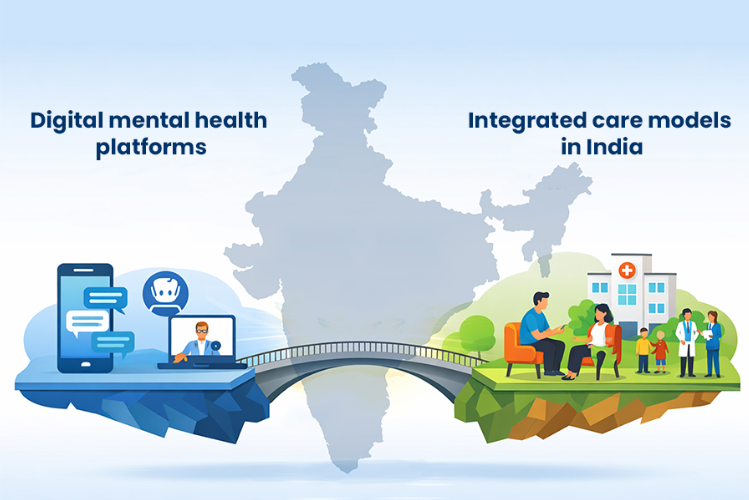
Mental health care in India is changing fast as the awareness around mental health issues grows. More people are seeking help for stress, anxiety, and depression actively. While the traditional in-person mental health care system is playing a big role, the new ways of support are also gaining popularity across the country due to their more accessible nature. These include two prominent approaches, viz. Online consultancy and self-help tools. Each approach brings its own advantages in terms of accessibility, continuity of care, personalization, and clinical depth. In this blog, we will explore both the traditional in-person approach and the digital mental health care model in the Indian context. We will also look at where Mpower stands in this space.
Why Does Mental Health Matter in India?
India's vast population faces a significant mental health burden, with the National Mental Health Survey estimating that nearly 150 million Indians need mental health care services, yet only a fraction currently receive it, leaving millions untreated amidst persistent stigma and limited access to care outside major cities. Traditional mental health care in clinics and hospitals struggles to meet this demand, especially in small towns and rural areas. But in recent years, technology has brought new hope: mobile apps, online counselling, and digital tools are making support more reachable than ever before.
Though the advent of technology has given a momentum towards mental health care and support in India, we need to explore whether those are enough or not.
What Are The Digital Mental Health Platforms?
Digital mental health platforms leverage the power of the internet to deliver psychological support through smartphones, laptops, and other connected devices. By integrating video consultations, chat-based therapy, AI-enabled tools, and guided self-help resources, these platforms aim to make mental health care more accessible, affordable, and stigma-free. They are designed to remove common barriers such as travel time, long waiting periods, and geographical limitations, especially for individuals living in smaller towns or those hesitant to visit a clinic.
What Do These Digital Mental Health Platforms Offer?
The digital mental health platform offers the following -
- Online therapy sessions
- Self-help tools and exercises
- Mood tracking features
- Chat support with counselors
- Educational content
These services reach people who cannot visit a clinic. Most of the users can access the help at their own convenience.
What Are The Key Benefits of Digital Platforms in Mental Health Care and Support?
Digital platforms are -
- Easy to access;
- affordable compared to in-person care;
- Available from anywhere;
- Flexible in timing
People can choose sessions that fit their schedule. They can also return to helpful tools at any time.
Are There Any Limitations?
Digital mental health care, while highly accessible and convenient, is not a complete solution for every individual or condition. It may be less effective for complex or severe mental health disorders that require intensive monitoring, multidisciplinary intervention, or emergency care.
Individuals experiencing acute psychiatric symptoms, high suicide risk, or co-occurring medical conditions often need structured, in-person clinical support. Additionally, digital platforms cannot fully substitute physical assessments, detailed psychiatric evaluations, or medical examinations when they are clinically necessary. Hence, an integrated care model is highly recommended for holistic mental health care and support.
What Are Integrated Care Models?
Integrated care means combining different types of healthcare services to deliver more effective and comprehensive outcomes. Instead of treating mental health issues in isolation, it blends mental health support with other health care services.
In an integrated model:
- Therapists work with doctors (psychiatrists and physicians)
- Mental health screening is part of general health checkups
- Counselors coordinate with medical teams to provide a holistic treatment approach
- Care plans are customized around the individual's needs
This model creates a seamless experience. Patients don't need to handle care by themselves. They get complete support under one roof.
Digital Platforms vs Integrated Care Models
| Factor | Digital Platforms | Integrated Care Models |
|---|---|---|
| Accessibility | High | Moderate |
| Personalization | Limited | High |
| Clinical Depth | Low-Moderate | High |
| Human Interaction | Limited | Strong |
| Best For | Mild cases | Moderate-severe cases |
Digital mental health platforms offer convenience and accessibility, making them ideal for early-stage support. However, integrated care models provide deeper clinical intervention and long-term outcomes. A blended approach often delivers the most effective mental health care.
So Which Is Better: Digital or Integrated Mental Health Care?
Neither is universally better; each serves different needs. Digital mental health care offers accessibility and convenience, making it ideal for early-stage or mild concerns. Integrated care models provide deeper clinical support and better long-term outcomes for complex cases. A blended approach, combining digital access with in-person expertise, is often the most effective solution.
Why Does Integrated Care Work?
The integrated care model is patient-centric. It treats the person as a whole and reduces gaps in care and support. It improves the long-term outcomes and lowers the risk of people dropping out. When mental health is part of overall health care, people feel more supported and understood.
How Do Digital and Integrated Mental Health Models Function in the Indian Context?
India is diverse. Here, cities have better access to hospitals and therapists. Whereas the rural areas often lack mental health professionals and care. Therefore, integrated care is still rare outside the big cities. With rapid technological advancement and widespread smartphone penetration, digital platforms have stepped in to bridge critical gaps in mental health access and delivery. Now, it is easy to reach the remote areas as well. As a result, many people prefer online help because it feels private.
Online mental health care is definitely convenient, but let's be honest, it can feel a bit cold and distant compared to sitting across from someone in person. That's why the best way forward for mental health care in India isn't about picking just one approach. Blending digital access with real, in-person support gives people both the flexibility of technology and the comfort of a genuine human connection.
Where Does Mpower Stand in the Indian Landscape?
Mpower is among India's leading mental health care providers. It works with a clear mission to make mental health care personal, effective, and easy to reach. Mpower combines digital tools with real-world care. This blend brings the strengths of both digital platforms and integrated models.
Core Strengths of Mpower
Mpower brings together online and in-person care, so you get therapy from real professionals and clinical support when you need it. They help with everything from stress and anxiety to trauma or family problems. But they're not about quick fixes. Mpower takes the time to understand what you need and helps you build a real path toward long-term well-being.
Mpower's Digital Support
Mpower provides digital access to counselling. This includes: Video sessions; Chat support with experts, and online self-help tools. These services are easy to use. You can book sessions through a simple app or website. This removes many barriers to seeking help. People in cities and towns can access care equally. This is beneficial for people who fear stigma or lack local support as well.
Mpower's Integrated Care Approach
Where Mpower stands apart is its focus on integrated care. It does not stop at online help. It includes: Real counsellors; Structured therapy; Coordination between teams; Referrals for in-person care as well. This makes care holistic and dependable.
Mpower believes that mental health is not separate from life. It connects emotional, social, and physical support. This view helps people feel stronger and more balanced.
Why Blended Models Are the Future in the Indian Mental Health Landscape?
Mental health needs are not one-size-fits-all. Some people need quick support. Others need ongoing care with clinical guidance. The future of mental health care in India will likely be a mix: Digital access for early help; Integrated care for deeper healing; Local support when needed. This model makes care more inclusive.
Challenges and the Road Ahead:
India still needs more: Skilled professionals, awareness campaigns, affordable systems, and support in local languages. Digital platforms help spread awareness fast. Integrated models build trust. Together, they make care more accessible and human. Mpower is working to overcome these gaps. It focuses on training, partnerships, and community support.
Conclusion: A Path That Cares:
Mental health care in India is evolving. Digital platforms opened a door. Integrated care made the path deeper and stronger. Mpower stands at this junction as a bridge. It offers:
- Easy access
- Real clinical support
- Continued care
- A human-centred journey.
Digital care and integrated care are not rivals. They are partners in a shared goal, better mental health for everyone. India needs both, and Mpower is already working to make this future a reality.
National Mental Health Survey of India
Frequently Asked Questions (FAQs)
1. What is digital mental health care?
Digital mental health care refers to online services that provide psychological support through video consultations, chat-based therapy, mobile apps, and self-help tools. These platforms improve accessibility, reduce stigma, and allow users to seek help conveniently from their homes.
2. What are integrated mental health care models?
Integrated mental health care models combine psychological, medical, and social support under one system. They involve collaboration between therapists, psychiatrists, and healthcare providers to deliver holistic, personalized, and continuous care for better long-term mental health outcomes.
3. What is the difference between digital and integrated mental health care?
Digital mental health care focuses on accessibility and convenience through online platforms, while integrated care offers comprehensive, in-person clinical support. Digital care is suitable for mild concerns, whereas integrated models are better for complex or severe mental health conditions requiring multidisciplinary treatment.
4. Which is better: digital or integrated mental health care?
Neither is universally better. Digital care works well for accessibility and early support, while integrated care provides deeper clinical intervention. A blended approach combining both ensures convenience along with effective, long-term mental health treatment.
5. Is digital mental health care effective in India?
Yes, digital mental health care is effective in improving access, especially in urban and semi-urban areas. It helps individuals seek timely support, though it may be limited in handling severe psychiatric conditions that require in-person clinical intervention.
6. What are the limitations of digital mental health platforms?
Digital platforms may lack clinical depth, physical assessments, and emergency support. They can be less effective for individuals with severe mental health disorders, high-risk conditions, or those requiring continuous medical supervision and multidisciplinary care.
7. Why are integrated care models important for mental health?
Integrated care models are important because they treat mental health as part of overall well-being. They ensure coordinated care between professionals, reduce treatment gaps, and improve recovery outcomes by addressing psychological, medical, and social aspects together.
8. Who should choose integrated mental health care?
Individuals with moderate to severe mental health conditions, co-occurring disorders, or those needing structured therapy and medical supervision should opt for integrated care. It is also beneficial for long-term treatment and relapse prevention.
9. Can digital and integrated mental health care work together?
Yes, combining digital and integrated care creates a hybrid model that offers both accessibility and clinical depth. This approach allows early intervention through digital tools while ensuring comprehensive treatment through in-person professional support.
10. What is the future of mental health care in India?
The future of mental health care in India lies in blended models that combine digital accessibility with integrated clinical care. This approach can improve reach, reduce stigma, and deliver more effective, personalized mental health support across diverse populations.
image credit : freepik

Understanding Substance Abuse: Types, Causes And Warning Signs
Acrophobia - Fear of Heights: Signs and How to Treat It