


Mental Exercises vs Physical Exercise: What Helps Your Mind More?
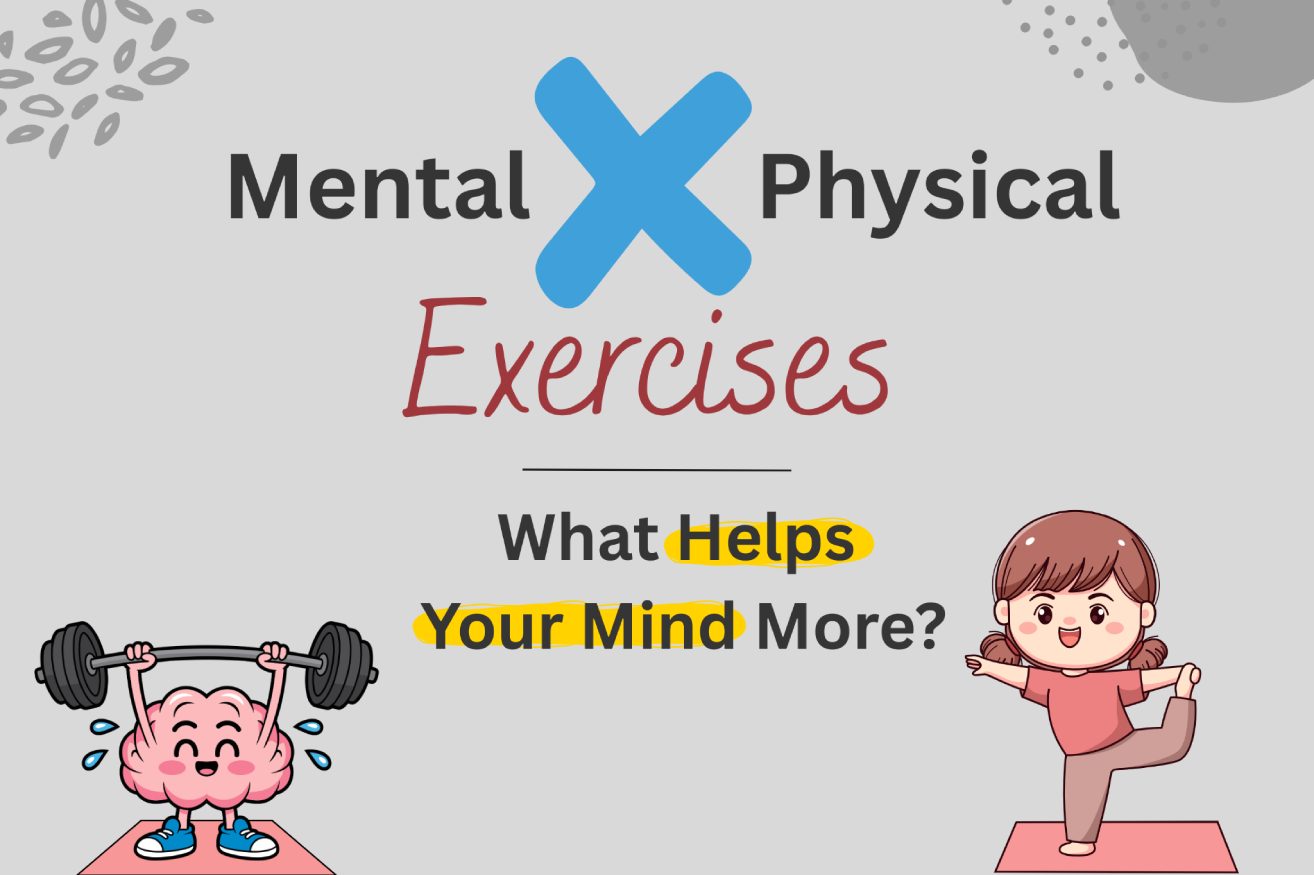
In a world that rarely slows down, the mind is constantly processing information, expectations, and emotions, often without rest. From students juggling academic pressure to professionals navigating demanding workdays, mental fatigue has quietly become a shared experience across age groups. As conversations around mental well-being grow louder, a common question emerges: what truly strengthens the mind -
- Training it through mental exercises or
- Engaging the body through physical activity
While puzzles, meditation, and cognitive tasks promise sharper focus, physical movement is equally praised for its stress-relieving and mood-enhancing effects. Rather than viewing them as opposing approaches, understanding how each works offers deeper insight into building mental resilience. The mind and body are deeply interconnected, and the choices we make daily can either support or strain this balance. Hence, exploring the impact of both mental and physical exercises helps uncover how they influence emotional stability, clarity of thought, and long-term mental health.
Why Does Your Mind Need Regular Exercise?
The mind, much like the body, needs to stay healthy and resilient. Constant stress, irregular routines, and long periods of inactivity can slowly weaken focus, emotional balance, and motivation. Without proper stimulation or movement, the brain struggles to manage everyday pressures effectively. Both mental exercises and physical activity play distinct yet essential roles in supporting mental well-being. While mental exercises sharpen thinking and improve emotional awareness, physical movement helps reduce stress and uplift mood. Understanding how these approaches work allows you to build daily habits that protect and strengthen your mental health over time.
What Are Mental Exercises?
Mental exercises are activities designed to stimulate the brain by challenging memory, focus, problem-solving, and emotional awareness. These exercises help keep the mind active, adaptable, and resilient in everyday life. Just as physical workouts strengthen muscles, mental exercises train the brain to process information more efficiently and respond better to stress. They can be practiced at any age and easily fit into daily routines, whether through mindful reflection, learning new skills, or engaging in cognitive tasks. When done regularly, mental exercises support mental clarity, improve concentration, and contribute to long-term brain health and emotional balance.
Common Mental Exercises
Mental exercises are simple yet powerful activities that help strengthen focus, memory, and emotional awareness when practiced regularly. Some simple mental exercises include:
Reading books or articles:
It keeps the brain engaged, improves comprehension, and enhances imagination while reducing mental fatigue.
Solving puzzles and riddles:
It challenges problem-solving skills and encourages logical thinking, helping the mind stay sharp and adaptable.
Memory games and recall tasks:
These train the brain to retain and retrieve information more efficiently, which supports concentration and mental clarity in daily life.
Writing thoughts or journaling:
It allows individuals to process emotions, reduce mental clutter, and gain better self-awareness.
Meditation and breathing practice:
These help calm the nervous system, improve attention, and promote emotional balance. Together, these mental exercises support overall mind health by strengthening focus, resilience, and emotional stability.
Read more about the exercises that help with depression.
What Are The Benefits of Mental Exercises?
Mental exercises improve how the brain processes information. They support memory, attention, and emotional balance. Over time, they help reduce mental fatigue and improve learning ability.
Key benefits include:
Better Memory:
Better memory is one of the most noticeable outcomes, as regular mental stimulation helps the brain store, recall, and process information more effectively.
Improved Focus
Improved focus comes from training the mind to stay present and attentive, reducing distractions and mental fatigue.
Sharper Thinking
Over time, improved focus leads to sharper thinking, allowing for quicker decision-making, clearer problem-solving, and improved cognitive flexibility.
Better Emotional Control
Mental exercises promote better emotional control by increasing self-awareness and mindfulness, helping individuals manage stress, regulate emotions, and respond calmly to challenging situations.
What Is Physical Exercise?
Physical exercise involves activities that keep the body active and increase energy levels, such as walking, yoga, sports, and stretching. While these activities strengthen muscles and improve physical fitness, they also have a powerful impact on mental health.
Learn more about the exercises that work for a mind workout.
Regular movement helps reduce stress, improve mood, and enhance brain function by increasing blood flow and oxygen to the brain. By staying physically active, the mind becomes more alert, balanced, and better equipped to handle daily challenges.
How Physical Exercise Supports Mental Health
Physical exercise improves blood flow to the brain. This supports oxygen supply and brain function. It also helps manage stress and improve mood.
Mental benefits of physical exercise include:
- Reduced stress
- Better mood
- Improved sleep
- Clearer thinking
Even light physical exercise helps the mind.
Mental Exercises vs Physical Exercise
Both mental exercises and physical exercise help the mind, but in different ways. Mental exercises strengthen thinking skills. Physical exercise supports emotional health and brain balance.
Mental Exercises Help With:
- Memory and learning
- Focus and attention
- Problem solving
Physical Exercise Helps With:
- Stress control
- Mood balance
- Energy levels
Hence, both are important for mental wellness. Now build an exercise habit that sticks for your mental health.
Which Is Better for the Mind?
There is no single winner when comparing mental exercises and physical exercise, as both support the mind in different but equally important ways. Mental exercises strengthen cognitive abilities such as memory, concentration, and problem-solving, helping the brain stay sharp and alert. Physical exercise, on the other hand, plays a key role in reducing stress, improving mood, and building emotional resilience.
When practiced together, they create a balanced approach to mental well-being. This combination allows individuals to think more clearly, manage emotions better, and maintain a calm yet focused state of mind in everyday life.
Best Exercise for Mind Health
The best exercise for mind health combines thinking and movement. Activities that involve both give better results.
Examples include:
- Yoga with breathing focus
- Dance routines that need memory
- Sports that involve planning
- Mindful walking
These exercises for the mind and body work together. Here is a list of the top ten quick exercises to lift your mood.
How Often Should You Practice?
Short and regular sessions work best. Daily effort matters more than long sessions.
A simple routine may include:
- 15 minutes of mental exercises
- 20 minutes of physical exercise
This routine supports mental clarity and emotional balance.
Here Are The Tips to Build a Healthy Mind Routine
Building a routine should feel easy and realistic. Enjoyment helps consistency.
Helpful tips include:
- Start with simple activities
- Mix different mental exercises
- Choose a physical exercise you enjoy
- Take rest when needed
Final Thoughts
There is no clear winner between mental exercises and physical exercise because both contribute uniquely to mental well-being. Mental exercises improve memory, focus, and thinking skills by actively training the brain. Physical exercise supports emotional health by reducing stress, boosting mood, and calming the mind through movement. When combined, they work together to strengthen overall mental health. This balanced approach helps individuals stay mentally sharp, emotionally stable, and better prepared to handle daily pressures with clarity and calmness.
image credit : freepik

Understanding Substance Abuse: Types, Causes And Warning Signs
Acrophobia - Fear of Heights: Signs and How to Treat It