


The Silent Language of Our Lineage: Why We Carry Pain We Didn't Create
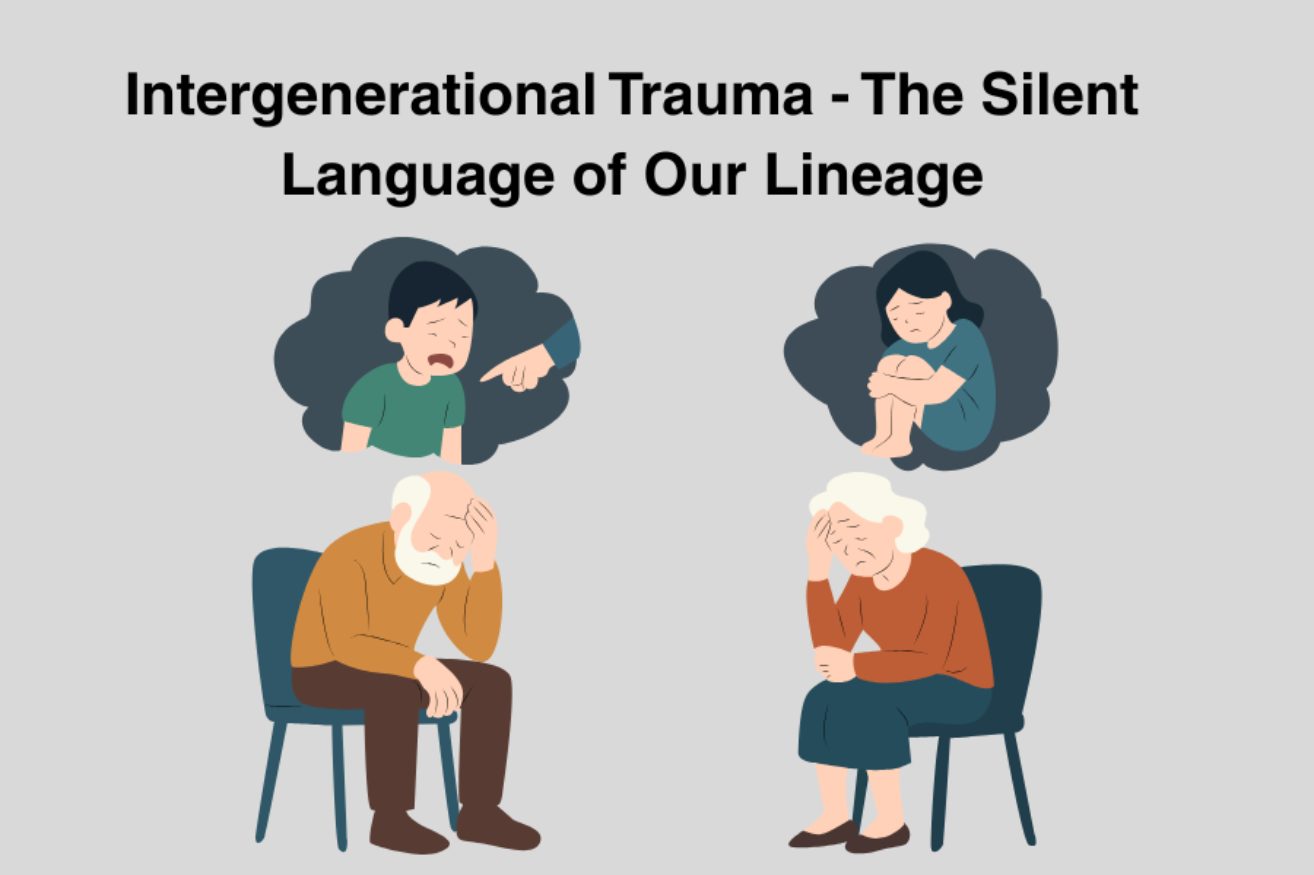
Do you ever feel an undeniable weight in your mother's sudden silence after an argument? Or find that you fall into the role of 'calmness' in your home, where you absorb everyone's stress until your own anxiety is playing softly, like an annoying song you can't turn off?
Perhaps you query why saying 'no' causes you guilt, or that the pressure to succeed feels like you are secretly rebelling against something that is simply an unexpressed thought that has been passed down. You are not overanalyzing it; instead, what you are speaking is a 'silent language' that we have inherited through many generations of the women in our family; you and I speak a consistent language based on the intergenerational trauma that has been handed down to us.
The Inheritance We Never Consciously Chose
In many Indian houses, the women in those families have become emotionally detached. The women in our family are raised to be the dharam - essentially the main pillar in the family structure that props up the entire family's emotional centre. Our grandmothers were to remain quiet about their dreams, our mothers showed us their dreams in silence, and we have inherited not only their love but also their grief, their anger, and their survival strategies.
This inheritance doesn't arrive as a clear story. It comes as emotional reflexes. As silence instead of confrontation. As people-pleasing instead of self-expression. As the belief that keeping the peace is more important than speaking the truth. Over time, these patterns become so normal that we assume they are part of our personality.
Read more: Therapy options to heal intergenerational trauma.
But they are not who you are. They are what you learned to be.
When The Empathy Becomes A Burden
If you are deeply empathetic, chances are you feel the emotional undercurrents of your family more than most. You sense unspoken tension. You notice mood shifts. You carry worries that aren't entirely yours. The same empathy that makes you the emotional anchor for others can quietly turn you into a container for unresolved pain - yours and theirs.
This is why you may feel exhausted even when nothing "bad" seems to be happening. Why family gatherings leave you drained. Why do you feel responsible for other people's feelings, even as your own needs go unmet? Your greatest strength, when unprotected, can slowly become a source of burnout.
It's Not Just in Your Mind - It's in Your Body
Here's something crucial: intergenerational trauma doesn't live only in thoughts and memories. It lives in the body. That knot in your stomach before a family event. The tightness in your neck that no amount of rest seems to ease. The constant tiredness, even after sleep and caffeine. The dread that appears without a clear reason. These are not flaws or weaknesses. They are signals from your nervous system - responses shaped by old emotional scripts that were learned long before you had a choice.
Your body learned these responses to keep you safe. To avoid conflict. To maintain harmony. To survive emotionally in an environment where certain feelings were unsafe to express. And sometimes, those scripts were written not by you, but by the generations before you.
Understanding The Past to Move Forward
Healing often begins not by blaming the past, but by understanding it. Imagine your emotional inheritance as a garden. It holds nourishment, wisdom, and love - but also weeds that grew unchecked for years. You didn't plant them, but you are living among them. So, the work is not to destroy the existing garden, but to tend to it consciously.
Start by becoming an emotional investigator of your own story. Notice the patterns that repeat in your family. The roles people play. The silences that speak louder than words. Reflect on histories of migration, loss, financial instability, societal pressure, and the ever-present "log kya kahenge?" mindset. Observe - not to judge, but to understand. This is where much of your fear may have originated. And once you see it clearly, it no longer has to define your present.
Listening to The Wisdom of Your Body
Your body remembers what your mind may have had to forget. Creating small moments of stillness can help you reconnect with that wisdom. This doesn't require dramatic lifestyle changes. Even five minutes of conscious breathing. A short walk without your phone. Sitting quietly and noticing where tension lives in your body. These moments send a powerful message to your nervous system: You are safe now. Over time, this awareness can soften patterns that once felt fixed and unchangeable.
Set Boundaries as Acts of Self-Respect
Perhaps the most challenging - and transformative - step in healing intergenerational trauma is learning to set boundaries. Not as walls that shut people out, but as gates that allow you to choose how much you give and when. Boundaries sound simple, but for many of us, they feel like betrayal. Saying "I need space" can feel like disrespect. Choosing yourself can feel selfish. But boundaries are not about withdrawing love - they are about refusing to carry pain that isn't yours.
It's learning to say:
- I can care without sacrificing myself.
- I can love you without holding your suffering.
- I can honour my lineage without repeating its wounds.
Whether you realise it or not, you are the bridge between generations - the one standing between what was and what could be. That role carries weight, yes. But it also carries immense power. When you begin to name what was once silent, you loosen its grip. When you choose awareness over autopilot, compassion over guilt, and peace over inherited obligation, you change the emotional direction of your lineage. The burden you feel is real. But it does not have to be permanent.
Once you understand it, you can gently place it down.
And in the space that opens up - quiet, unfamiliar, and deeply freeing - you finally get to write your own story. Not over your mother's. Not against your grandmother's. But after them.
With more voice.
More freedom.
And a whole lot more peace.
Conclusion: Intergenerational trauma may be silent, but it is not invisible. When you recognise its patterns in your emotions, body, and relationships, healing begins. You don't have to carry what was never meant to be yours forever. By choosing awareness, boundaries, and compassion, you honour your lineage while freeing yourself. In doing so, you become the turning point-where inherited pain transforms into understanding, resilience, and peace.
image credit : freepik

Understanding Substance Abuse: Types, Causes And Warning Signs
Acrophobia - Fear of Heights: Signs and How to Treat It