


App-Based Therapy vs Clinical Centres: What Works Better? - Mpower's View
Mpower's Perspective:
Over the years, the way we think about health has changed profoundly. Today, we understand that caring for the body alone is not enough; your mind also deserves equal attention and compassion. You don't have to carry feelings of sadness, burnout, workplace exhaustion, or exam stress all by yourself. You should reach out for professional care and support. Reaching out to a psychologist or mental health professional can help you build coping skills, gain clarity, and navigate difficult phases with resilience and confidence. Seeking support is not a sign of weakness; it is a step toward inner strength and emotional growth.
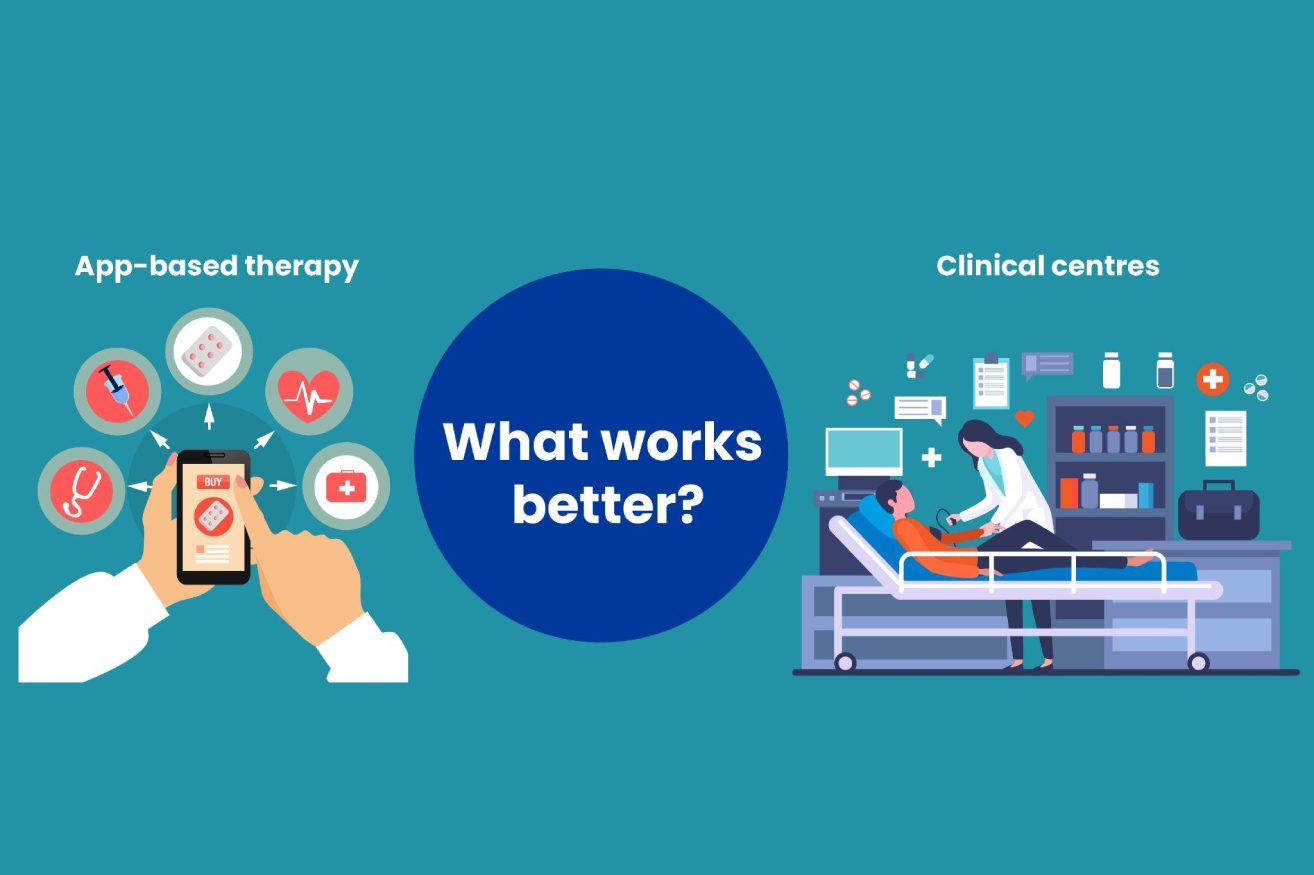
What was once limited to scheduled clinic visits and physical therapy rooms is now also available at the tap of a screen, thanks to app-based therapy, making mental health care more accessible than ever before. However, with this growing convenience also come important questions worth exploring.
Is app-based therapy truly effective?
How does it stack up against conventional clinical centers?
And, most importantly, which option suits you best?
At Mpower, one of the best mental health care and support facilities available in India, we think the solution isn't merely 'better' or 'worse'. It concerns your needs, your current stage in the journey, and your preferred method of healing. Let's explore this together in a genuine, practical manner.
The Expansion of Mental Health Care Support and Therapy via Applications
Envision this:
It is late at night. You are really tired from the day. The day has been a lot to handle. You start to feel overwhelmed by your emotions. Trust me, these things happen to me a lot. My emotions affect me frequently; my feelings affect me frequently.
You pick up your phone. Open a therapy application. Then you get connected to a specialist. This person listens to you. These are professionals, and they understand how you are feeling. They tell you that they hear you and they know your emotions are real. Then they help you come up with a plan to deal with your emotions. The therapy application and the specialist are there to help you with your emotions. You use the therapy application to talk to the specialist. They give you advice on how to cope with your feelings. The specialist is someone who can help you when you are feeling overwhelmed by your emotions.
Here lies the strength of therapy through apps: it is available at your fingertips.
Let's Explore What an App-Based Therapy Platform Offers
App-based therapy platform provides -
- Flexible schedule
- Connect to sessions from any place
- Less expensive than many in-person options
- A sense of privacy and anonymity
- Tools like personal development activities, emotional tracking, and resources
For many individuals, app-based therapy makes mental health support more accessible by eliminating key obstacles such as time limitations, affordability concerns, and the stigma often associated with seeking therapy. This convenience helps more people to begin their mental wellness journey with confidence and ease.
So, What Is The Importance of Clinical Centers?
Imagine a different situation. You enter a serene therapy space, a carefully curated therapy environment - quiet and peaceful, secluded, and without any interruptions. The environment itself feels stabilizing. A therapist welcomes you in a way that asks you to sit down and looks at you softly to show they care about you and what you are going through.
When you start talking, the therapist really listens to what you're saying. They also notice how you are sitting, the pauses when you talk, how your breathing changes, and what you do with your hands when you talk about something. These small things that people often do not notice help the therapist understand what you might not be saying out loud. The therapist pays attention to these things to understand you, and the therapist uses these cues to help the therapist get an idea of what you are feeling and what you need to talk about.
Their reactions are swift and responsive - modifying tone, speed, and method as needed. There exists room for quiet without discomfort, feelings without disruption, and openness without criticism. In that common physical setting, the therapeutic bond frequently appears more profound, immersive, and deeply human.
The core of in-person clinical therapy lies in the strength of human presence.
Let's See What Clinical Centers Offer:
- Stronger emotional bond via in-person communication
- Organized setting for recovery
- Availability of diverse specialists (psychiatrists, psychologists, counselors)
- Skill in interpreting non-verbal signals
- Assistance for more complicated or serious conditions
For people facing severe trauma, ingrained issues, or those who flourish through personal relationships, therapeutic facilities can be life-changing.
Well... Which One of The Functions Is More Effective?
Here's the genuine reality from Mpower:
Neither is inherently superior - both are valid, strong, and beneficial, based on the requirements of each person. It's more about which suits your needs than which is better.
Optimal Moments for App-Based Therapy:
- You require prompt, readily available assistance.
- You are trying therapy for the first time.
- You desire continuous updates and adjustable timing.
- You're managing a hectic lifestyle.
So, When Clinical Centers Could Be More Beneficial:
- You favor direct human contact.
- You are dealing with trauma or serious mental health issues.
- You gain advantages from organized therapeutic settings.
- You desire entry to a group of experts.
Mpower's Method: Blending Both Realms
At Mpower, we perceive therapy as a spectrum instead of a strict, binary option. Support for mental health varies for everyone - it adapts to a person's needs, comfort level, and situation. What is really important is not how they do it. That they are trying to get help. The thing that matters is that people are committed to seeking therapy. Seeking help is what truly matters. As requirements evolve or progress, therapy can adapt - transitioning from online check-ins to face-to-face meetings, or even a careful mix of the two. We are convinced that adaptability fosters recovery. By merging accessibility with depth, convenience with connection, we guarantee that individuals obtain care tailored to their journey - rather than the opposite.
We equally hold the belief in continuity:
- Begin virtually, expand to face-to-face assistance.
- Begin face-to-face, enhance with online resources.
- Adjust as your path progresses.
Your mental health requirements are not fixed - they evolve with circumstances and personal experiences.
The Final Takeaway
Therapy through apps and clinical centers is not a rival; they collaborate in your recovery process. Your experience is unique - and thus your selection of support should reflect that. If you're uncertain about where to start, consider posing this question to yourself:
- "Am I in need of convenience or connection at this moment?"
- "Am I seeking coping assistance or more profound healing?"
- "What seems more secure and reachable for me today?"
There isn't a universal solution - and that's perfectly fine. The key point is that you opt for support instead of silence.
image credit : freepik

Understanding Substance Abuse: Types, Causes And Warning Signs
Acrophobia - Fear of Heights: Signs and How to Treat It